A Productive Day in SaaS Sales: What Top Reps Actually Do
The daily schedule of a SaaS sales representative can look deceptively simple from the outside — calls, meetings, and emails. But behind that apparent routine lies a finely tuned rhythm of prospecting, coordination, reporting, and continuous learning. How reps divide their time depends heavily on seniority, funnel maturity, and product complexity.
How SaaS sales reps spend their day
While every company is different, here’s a realistic breakdown of where the hours go on an average day — based on aggregated data and interviews with sales managers:
Junior sales rep
- Prospecting and lead generation: 40–50% (finding potential clients, researching profiles, enrichment via LinkedIn or CRM)
- Cold outreach and follow-ups: 25–30% (sending personalized emails or LinkedIn messages, short intro calls)
- Internal coordination and admin: 10–15% (CRM updates, meetings, reporting, preparing pitch decks)
- Training and feedback sessions: 10%
Senior sales rep
- Client meetings and demos: 40–45%
- Account management and upsell opportunities: 20–25%
- Strategy, coaching juniors, or working on pipeline health: 15–20%
- Admin and coordination: 10–15%
As seniority rises, reps shift from cold acquisition toward relationship building, internal mentoring, and optimizing conversion ratios rather than volume.
A good SaaS rep isn’t just chasing leads — they manage energy,” says one sales director. “Two solid meetings can be worth more than fifty emails.
How to report and verify daily work
Without structured reporting, even talented reps lose focus. A transparent system also builds trust between management and sales teams.
Recommended framework:
- CRM check-in: Every deal update, note, or meeting must be logged before day’s end.
- Activity dashboard: Calls, emails, LinkedIn messages, and meetings automatically tracked (via HubSpot, Pipedrive, or a custom dashboard).
- Daily summary form: 3 short answers — What worked today? What didn’t? What’s next?
- Weekly sync: Review top metrics (meetings booked, demos held, conversion to next stage).
- Shadow reviews: Once per month, team leads listen to a recorded meeting and provide coaching notes.
This system doesn’t just monitor — it develops reps through accountability and pattern recognition.
Collaboration with marketing
Modern sales can’t exist in isolation. Sales teams depend on marketing to provide warm leads, relevant content, and brand authority — but marketing also needs feedback from sales to adjust targeting and messaging.
Effective collaboration loop:
- Weekly joint pipeline meeting: marketing brings MQL stats, sales shares lead quality.
- Shared Slack/Notion space for campaign feedback (“This ad brought leads outside our ICP”).
- Quarterly persona workshops: both teams refine who the “ideal customer” actually is.
- Mutual OKRs: for example, Marketing = 200 MQLs/month, Sales = 30% MQL → SQL conversion.
Sales needs marketing like fuel — but marketing needs sales for steering,” noted one SaaS founder. “If they talk every week, the funnel moves 25% faster.
Outreach expectations
A seasoned SaaS sales lead shared his benchmark:
Each rep should aim for 10–20 outreach meetings per week — otherwise the pipeline dries up within a month.
That doesn’t mean 20 cold calls a day; it includes LinkedIn meetings, email replies, and inbound demos. The key is consistency: fewer big bursts, more regular touches.
For teams just starting out, this benchmark can be adjusted:
- New reps: start with 5–10 meetings per week, focusing on learning structure.
- Experienced reps: target 15–25, depending on deal cycle length and region.
Consistency across quarters matters more than peak weeks.
Motivation through gamification
Sales performance thrives on competition — but only if structured right. Traditional leaderboards showing the “Top 3 sellers” often demotivate 80% of the team, who feel they can’t catch up.
One sales manager in a digital agency solved this by creating micro-leagues:
We split our 20-person team into four groups of five. Each group had its own leaderboard and weekly reward. Suddenly everyone was competing — and smiling again.
The result? A 17% increase in outreach activity and a 12% higher meeting-to-close ratio in the next quarter. Gamification works best when success feels attainable, not reserved for superstars.
Other ideas:
- Weekly badges for consistency (“Follow-up Hero”, “CRM Champion”).
- Shared dashboards showing cumulative team progress, not just individual wins.
- Recognition rituals during Friday standups.
Using tools to support discipline and speed
Automation keeps reps focused on selling, not admin. Track tasks, remind them of stale deals, and keep conversation momentum high.
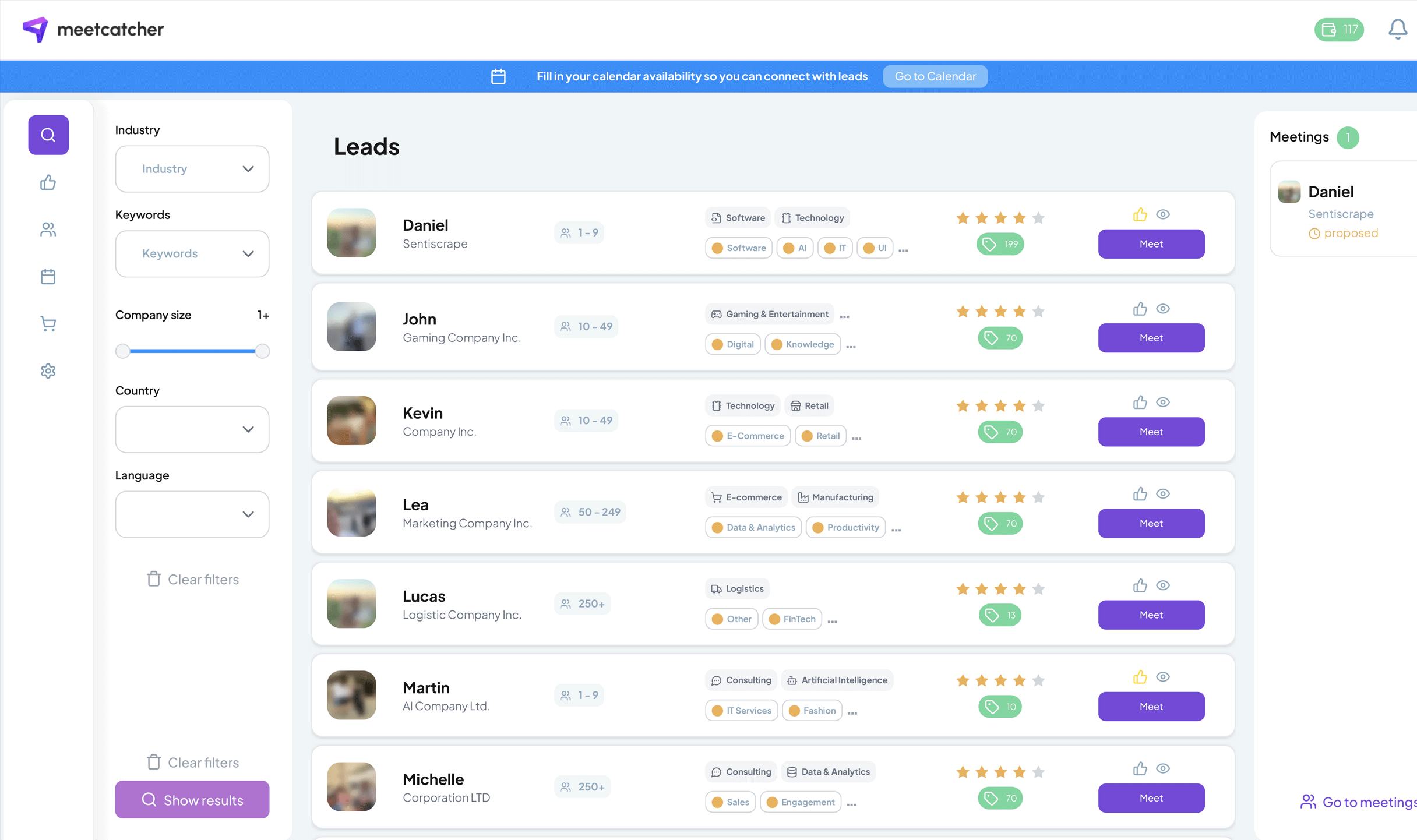
Tools like Meetcatcher can become part of this daily rhythm — helping reps initiate new B2B meetings instantly with potential clients they haven’t met before. Instead of spending hours hunting for replies, they can jump straight into short, structured video conversations that keep their weekly meeting targets on track. Combined with a CRM and marketing sync, this creates a complete ecosystem — one that runs on precision, not pressure.
Final thought
A great SaaS sales day isn’t about working 12 hours — it’s about knowing what truly moves the needle. Balance structure with autonomy, track impact not activity, and keep the feedback loop between marketing and sales alive. That’s how a daily plan becomes a growth engine — not just a schedule.