Canceling Calls on Meetcatcher: How It Works and Why It Matters
Canceling a meeting might not sound like a big deal — but on Meetcatcher, every scheduled call represents someone’s investment of time and credits. That’s why cancelations follow clear and fair rules designed to protect everyone involved and keep the platform efficient and respectful.
Why the cancelation system exists
Meetcatcher connects professionals who have committed their time and, in many cases, spent credits to meet you. When a meeting is canceled too close to its start or without notice, it doesn’t just waste time — it breaks trust.
To keep the experience professional and reliable, the system uses credit-based penalties. They’re not meant to punish, but to encourage reliability and accountability — the same principles that make business relationships strong.
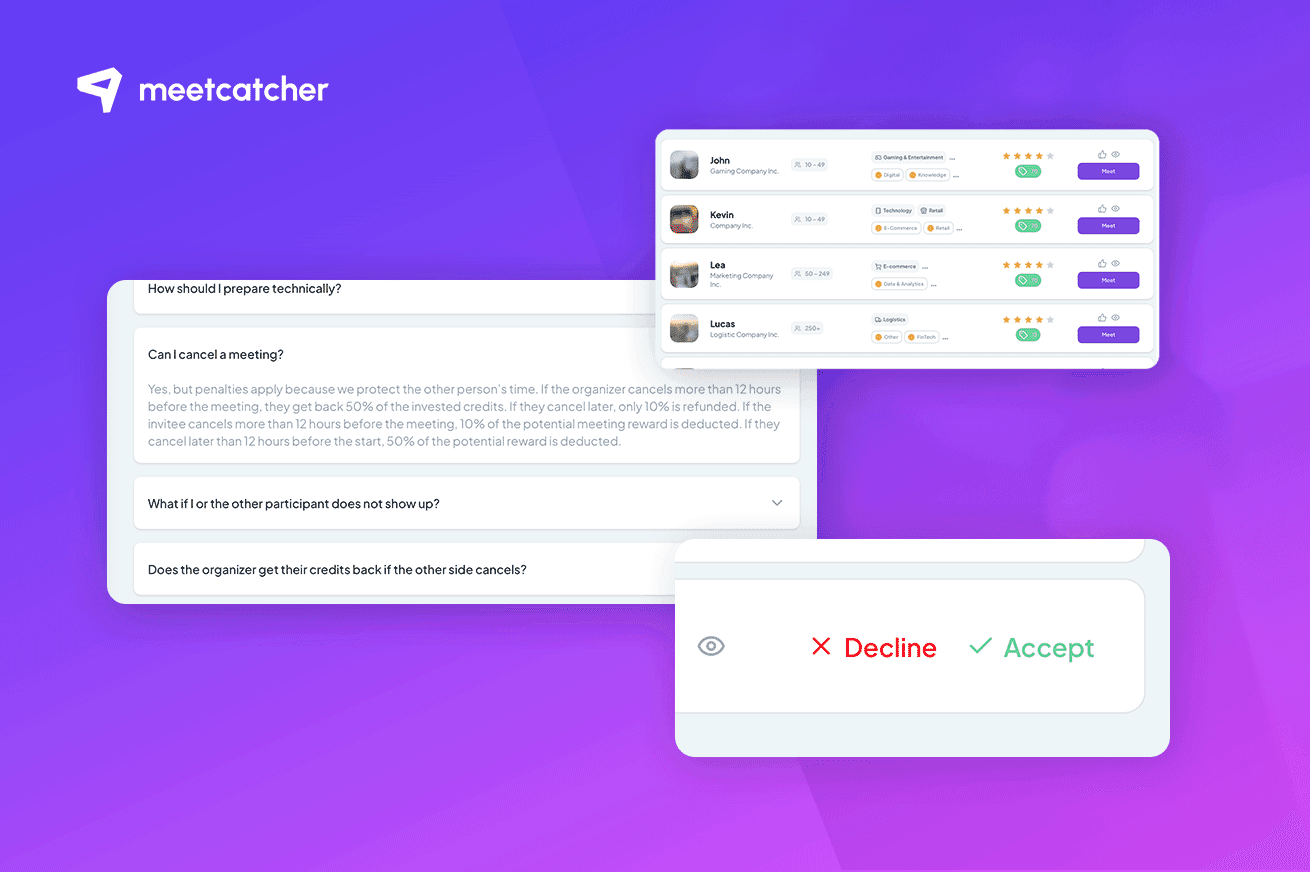
The cancelation rules
Meetcatcher allows both the organizer and the invitee to cancel a meeting, but the outcomes differ depending on who initiates it and when.
If you’re the organizer (the person who requested the meeting):
- Cancel more than 12 hours before the start → you’ll receive 50% of your spent credits back.
- Cancel within 12 hours before the start → you’ll receive 10% of your credits back.
The remaining credits go to cover the time and preparation the invitee may have already invested.
If you’re the invitee (the person who accepted the meeting):
- Cancel more than 12 hours before the meeting → you lose 10% of the potential credit reward.
- Cancel within 12 hours before the meeting → you lose 50% of the potential reward.
This system ensures fairness — it respects the time of both sides and prevents last-minute changes from disrupting schedules.
The cancelation rules may look strict at first,” says one early Meetcatcher user, “but after a few calls, you realize they make the platform reliable. Nobody wants to plan around meetings that never happen.
Why penalties help the culture
Every rule on Meetcatcher is designed to save time — the most valuable currency in business. When users know that last-minute cancelations have consequences, they:
- Plan more carefully.
- Show up more consistently.
- Respect each other’s time and effort.
That creates a culture where calls actually happen — and where every 10-minute slot turns into something meaningful.
This reliability also increases confidence between users. You know that if someone accepts your meeting, there’s a very high chance it will actually take place.
In short, the credit system works as a trust engine — it rewards good behavior and gently discourages careless cancellations.
What happens if you simply don’t show up
Missing a meeting entirely, without canceling, is a serious issue. If you fail to attend a confirmed call, Meetcatcher automatically deducts 10% of all your owned credits — including those already invested in future meetings.
This rule exists to ensure accountability. In B2B, reliability is everything — and this keeps the experience professional for everyone.
If both sides don’t join within 20 minutes, the meeting closes automatically and is marked as no-show for both participants.
Ratings after the call
At the end of each successful meeting, the organizer can rate the quality and professionalism of the conversation. This rating directly influences your future visibility and meeting value on the platform.
Positive ratings increase your trust level, meaning:
- Your meeting invitations are more likely to be accepted.
- The credits you earn for future calls can grow.
Negative behavior — such as canceling too often, ignoring invitations, or not showing up — gradually lowers your reputation score. That’s how the Meetcatcher ecosystem keeps improving over time: reliable users are rewarded, unreliable ones fade out.
Final note
Meetcatcher isn’t just a meeting tool — it’s a professional network built on respect and efficiency. The cancelation and rating systems exist to protect your time, keep the experience fair, and encourage meaningful connections.
By following these simple rules, you’ll maintain a strong reputation, save credits, and get the most out of every meeting you schedule.