How Many Follow-Ups Are Too Many in B2B Sales?
Few things in sales feel as uncomfortable as the follow-up. At some point, every rep asks themselves: “Am I becoming annoying?” It’s a fair question — and also a dangerous one. Because stopping too early is one of the most common ways to lose an otherwise winnable deal.
The myth of “too many follow-ups”
There’s a saying among seasoned reps:
When you start feeling awkward about following up, do it twice more.
That’s obviously an exaggeration, but it carries a truth. Most salespeople give up far too early. Research shows that 80% of sales require at least five follow-ups, yet nearly half of reps stop after just one or two attempts.
That’s a massive missed opportunity. However, the relationship between frequency and success isn’t linear — after a certain point, persistence becomes noise. The goal is to balance consistency with respect.
Why follow-ups work
In B2B, buyers are busy. They read your email, intend to respond, then get distracted. A polite reminder helps them resurface your message in their inbox at the right time.
Studies suggest that each well-timed follow-up can increase your reply rate by 10–20%, up to around the fourth message. After that, engagement gradually drops — unless you’re offering genuinely new context or value each time.
That’s why top-performing reps plan follow-ups strategically, not emotionally.
Timing and frequency
If you’re unsure how to pace your outreach, here’s a simple rhythm that works across industries:
- Day 0: Initial contact
- Day 3–4: First follow-up — friendly nudge
- Day 7–10: Second follow-up — new angle or additional value
- Day 14: Third follow-up — summary and gentle reminder
- Day 21+ (optional): Last check-in — close with goodwill
Beyond that, shift to long-term nurturing (LinkedIn engagement, newsletters, or light reactivation later).
This cadence keeps you visible without crossing into spam. The most successful SDR teams maintain about 4–6 touchpoints per lead before moving on.
Channels that perform best
Follow-ups don’t have to live in one channel. In fact, mixing them increases conversion. According to aggregated CRM data from B2B SaaS teams:
- Email remains king — roughly 60% of follow-up replies come here.
- Phone calls drive around 25% of meaningful re-engagements, especially when preceded by an email.
- LinkedIn messages or comments boost overall conversion by 15–20%, as they feel more human and less “salesy.”
- SMS or WhatsApp are effective only for existing relationships or warm leads.
Top performers blend these formats: they email, then comment on a post, then follow up with a short call. Familiarity compounds trust.
When follow-ups become counterproductive
The line between persistence and annoyance is thin. If your messages are identical (“Just checking in”), you’re adding noise, not value. If you follow up daily, you’re training your prospect to ignore you.
To stay professional, always add something new:
- A piece of information they might find useful.
- A link to a relevant resource, demo, or case study.
- A short update about your product that connects to their need.
Every message should feel like an opportunity to help, not to pressure.
How to write a great follow-up message
The perfect follow-up is short, positive, and framed as an offer of help, not a demand for time. For example:
Hi Laura, Just wanted to check whether you had the info you needed from our last chat. If it helps, I can share a short use-case from a company similar to yours — it might clarify what results are realistic.
Would that be useful?
This tone shifts the message from “please reply” to “here’s something that might help you,” which increases response rates dramatically.
Tools make it easier
Consistency is hard when you rely on memory. That’s why good sales teams automate reminders through CRM tools — they prompt you when to follow up next. Even simple systems like HubSpot, Pipedrive, or ClickUp CRM can track which stage each lead is in and trigger an alert when it’s time to re-engage.
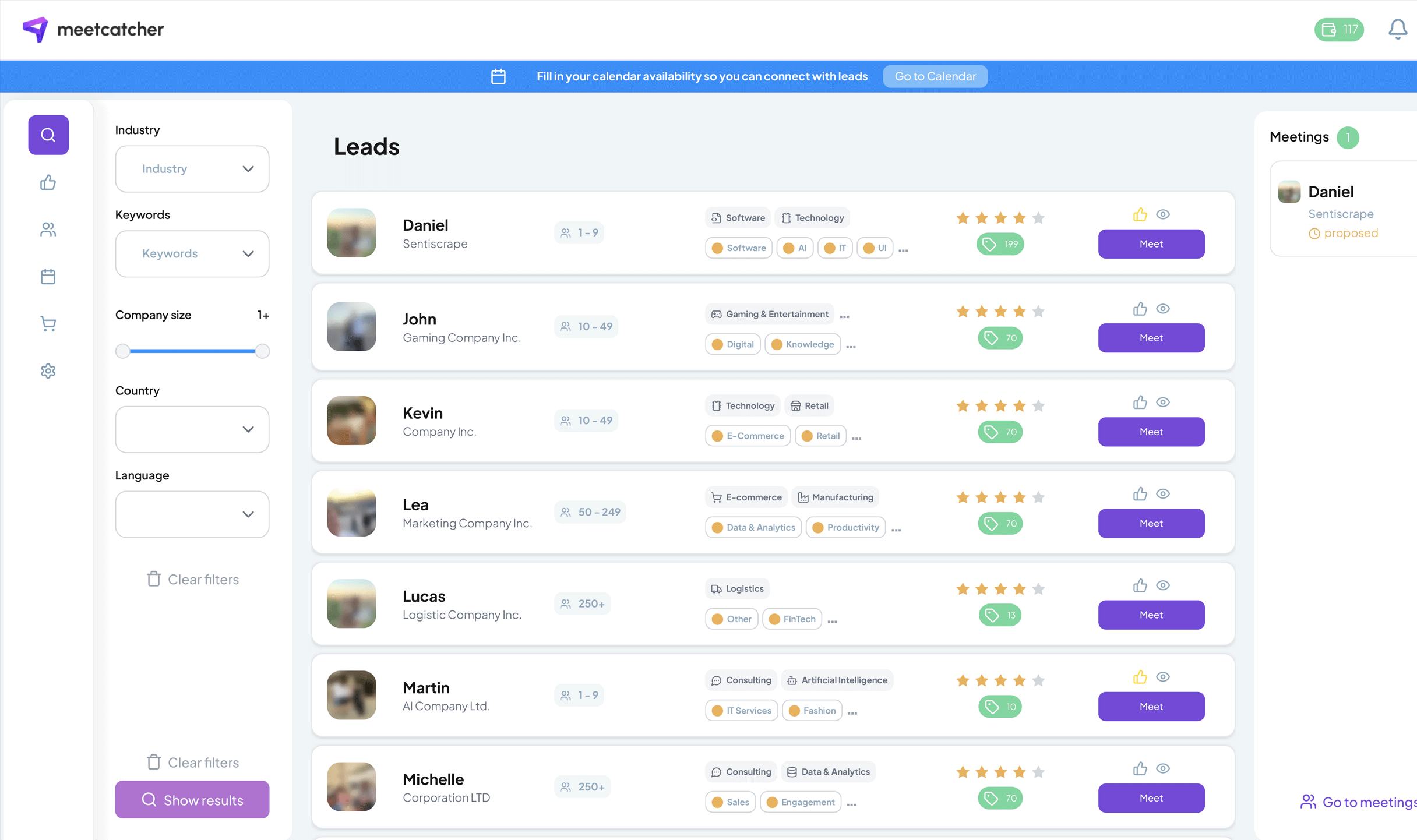
Platforms like Meetcatcher complement this by letting you instantly schedule quick follow-up calls or video chats once the contact reappears. Instead of another email thread, you turn the reminder into a real conversation — the fastest way to move a deal forward.
The stats behind persistence
Industry benchmarks show:
- Around 60% of deals come from leads contacted five times or more.
- The first follow-up alone increases your chance of conversion by 25%.
- After the fourth, effectiveness begins to decline — but it’s still better than giving up early.
- Multi-channel follow-ups (email + call + LinkedIn) improve win rates by 35–40% compared to single-channel efforts.
These aren’t rules; they’re reminders that momentum matters. The point isn’t to overwhelm — it’s to stay visible and relevant long enough for timing to align.
Final takeaway
Follow-ups are where discipline meets patience. The best reps don’t chase — they check in, offer help, and make it easy to say yes.
Keep following up — not endlessly, but deliberately. Because sometimes, the difference between a lost lead and a closed deal is simply the one reminder you almost didn’t send.