How the LinkedIn Algorithm Really Works in 2025
Everyone wants to “crack” the LinkedIn algorithm — but here’s the truth: it can’t be cracked, only understood. The algorithm changes frequently, yet human behavior stays surprisingly consistent. By watching hundreds of profiles and thousands of posts, patterns start to emerge — and they tell us what really works in 2025.
It’s not about tricks — it’s about patterns
Nobody outside of LinkedIn’s data science team truly knows how the algorithm works. But we can identify what correlates with reach and engagement.
At its core, LinkedIn rewards three things:
- Consistency – posting regularly over months, not weeks.
- Meaningful engagement – comments and conversations, not just likes.
- Relevance – content that keeps users scrolling within the platform.
If your content helps LinkedIn keep people on LinkedIn, you’ll be rewarded.
External links: once taboo, now neutral
For years, creators avoided including links that led outside the platform. The belief was that LinkedIn penalized “external exits.” Many marketers placed links in the first comment instead of the post body.
But as one senior content strategist explained:
We ran dozens of A/B tests. Posts with external links performed nearly the same as those without. LinkedIn seems to care more about engagement quality than link placement.
That said, the platform still prefers native formats — image carousels, text posts, or videos that don’t pull users away. So if you’re linking externally, make sure the surrounding post creates value on its own.
Timing: no longer a factor
Another myth that refuses to die is the best posting time. Morning? Lunch? Tuesday at 10 a.m.? Turns out — it doesn’t matter anymore.
Several sales professionals ran their own experiments:
We posted at 8 a.m., 3 p.m., and even midnight — and got identical engagement curves. Timing didn’t correlate at all.
Why? Because LinkedIn’s feed is now asynchronous. Your post may appear in someone’s feed hours or even days later, depending on their habits and your engagement rate.
Focus on what you say, not when you post it.
The long game: consistency is the new virality
What truly matters in 2025 is how long you stay active. A sales rep shared his personal timeline:
A few years ago, it took about 3–4 months of steady posting to start seeing results. Now it’s more like 4–6 months before the algorithm really rewards consistency.
The system measures your reliability as a creator. If you post valuable content over time, engagement compounds. LinkedIn wants trusted, consistent voices — not one-hit wonders.
So plan for the marathon, not the sprint.
The “1 Like = 100 People” rule
You’ve probably heard this rough equation: Each like equals 100 new people reached.
While it’s not exact, it’s surprisingly close. A digital marketing consultant explained:
I tracked reach on 40 posts. Every time I got around 10 likes, impressions landed near 1,000. It’s not a rule — but it’s a decent predictor.
It works because every interaction exposes your content to the engager’s network. The more diverse the engagement, the broader the reach. That’s why early engagement — within the first 2–3 hours — is so powerful. It signals to LinkedIn that your post is “alive.”
Engagement pods: clever or counterproductive?
Many teams coordinate internal engagement — liking and commenting on each other’s posts at the same time — hoping to boost visibility. But one social media specialist warned:
I can’t prove it, but I’m pretty sure LinkedIn detects patterns. If it’s always the same people, at the same time, on every post — it probably flags it as artificial.
He’s likely right. LinkedIn’s machine learning models track behavioral patterns, and identical engagement loops could reduce authenticity signals. The safest approach? Encourage colleagues to engage organically, not on schedule.
The hidden multiplier: conversations
The biggest single driver of visibility isn’t likes — it’s comments that spark back-and-forth dialogue. Each comment thread extends post life, sometimes keeping it visible for 3–5 days. That’s why even older posts can suddenly resurface after new comments.
It’s less about gaming the system and more about starting real discussions.
If people are talking in your comments, the algorithm assumes your post adds value,” said a content coach. “That’s the whole game.
Building momentum with discipline
Success on LinkedIn is slow but predictable:
- Post 2–3 times per week.
- Reply to every comment.
- Encourage debate, not agreement.
- Stay active for at least six months.
Your reach may start small — a few hundred views — but steady engagement compounds into thousands. Each new follower slightly increases your average reach.
From algorithm to outcome
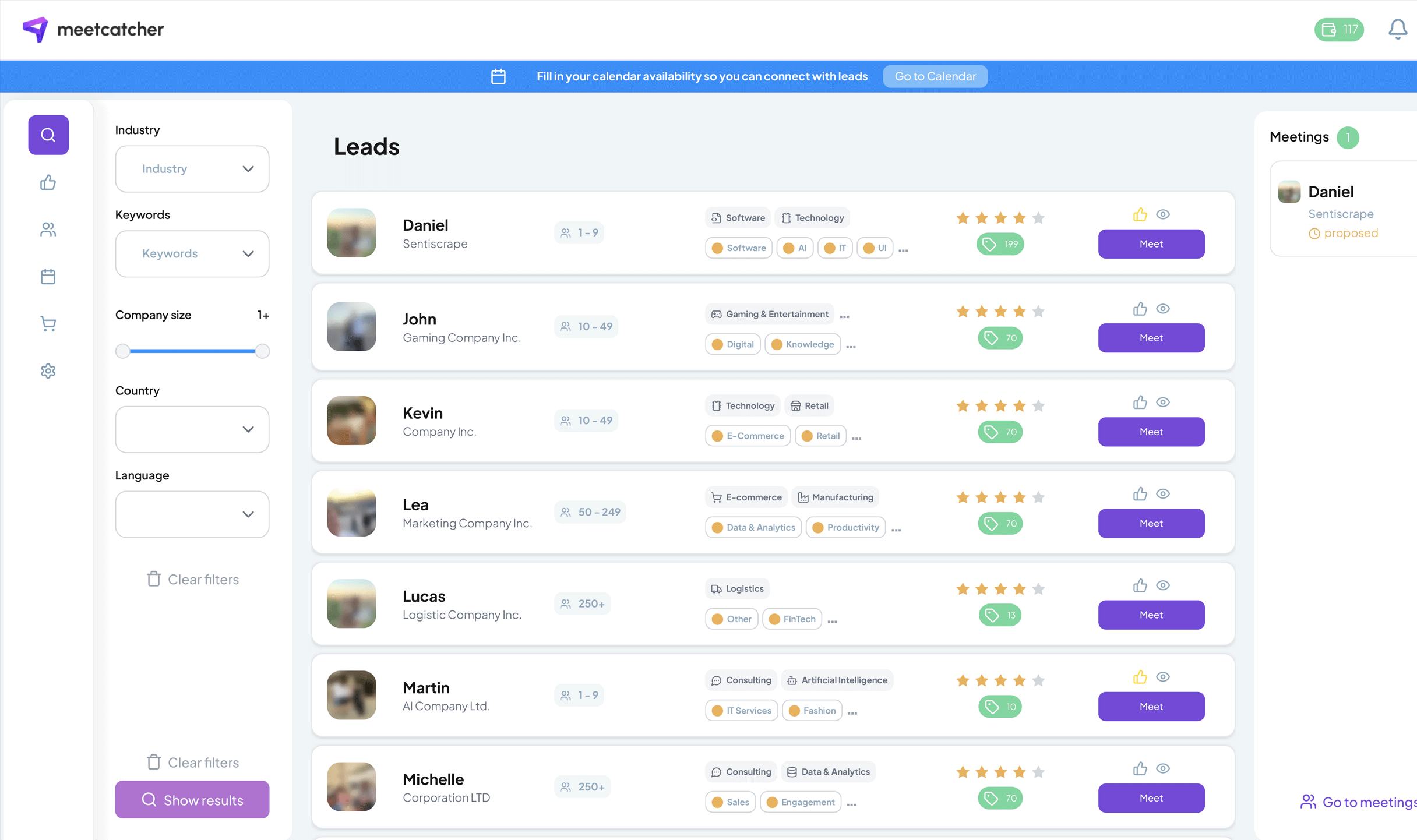
At the end of the day, algorithms don’t buy your product — people do. The goal isn’t just reach; it’s connection. And when those online interactions start to turn warm, tools like Meetcatcher can help you turn algorithmic visibility into real B2B meetings. It bridges the gap between being seen and being remembered — where conversations turn into opportunities.
Final thought
You don’t need to outsmart the algorithm. You just need to outlast it. Stay consistent, stay authentic, and let time do the heavy lifting. Because LinkedIn doesn’t reward tricks — it rewards trust.