Networking Online vs. Offline: How to Build Real Business Connections
Business networking has always been about one thing — creating real relationships that lead to opportunities. But while the principles stay the same, the environment has split. Today, professionals move between offline and online spaces, and each has its own rhythm, etiquette, and strategy.

Offline networking: the power of short, real meetings
Offline networking remains irreplaceable for building trust fast. Events, meetups, and especially business speed networking sessions are where first impressions and human chemistry happen.
A typical speed networking event works like this:
- You sit across from another professional for about four minutes.
- You introduce yourself, exchange business goals, and explore collaboration potential.
- Then you switch tables and meet the next person.
It’s intense, fast, and surprisingly effective. You don’t have time for small talk — every second counts. Participants often leave with 10–20 meaningful leads in an hour.
It’s like pitching 20 investors in a single afternoon,” said one founder. “But with less pressure and more authenticity.
Speed networking forces clarity — you learn to summarize what you do in one minute and listen just as actively. It’s also the best training ground for sales reps, especially for improving pitch confidence, articulation, and empathy.
Online networking: visibility over proximity
The online world, meanwhile, gives you reach that no local event can. Here, the dominant playground is LinkedIn, where professionals interact through posts, comments, and direct messages.
The rules are different: rather than short bursts of conversation, success depends on consistent visibility and valuable contributions.
Building a personal brand through content — insights, stories, case studies — keeps you on the radar even when you’re not actively reaching out. It’s about trust before contact.
One sales professional explained how he sees the dynamic:
On LinkedIn, only about 2% of people are truly active — they post, comment, or react. Most of my clients are in the other 98% who stay silent. But I need those active 2% to carry my message to them through comments and likes. That’s how visibility spreads.
This approach turns content creators into amplifiers. Even if your target buyers rarely post, they still scroll. When mutual connections engage with your content, it travels through the algorithm and lands in your prospect’s feed — often the first subtle touchpoint before outreach.
Tips for effective online networking:
- Post consistently — at least once a week.
- Comment genuinely on others’ posts to expand your reach.
- Personalize connection requests, even short ones.
- Track engagement in a CRM or spreadsheet — who interacts, how often, and on what topics.
Over time, you’ll spot patterns and micro-communities where your message resonates best.
Blending both worlds
The smartest professionals don’t choose between online and offline — they combine both strategically. Offline builds depth, online builds reach. Meet someone at a conference? Follow up on LinkedIn. Engage with someone’s post online? Suggest a coffee chat or a 10-minute intro call.
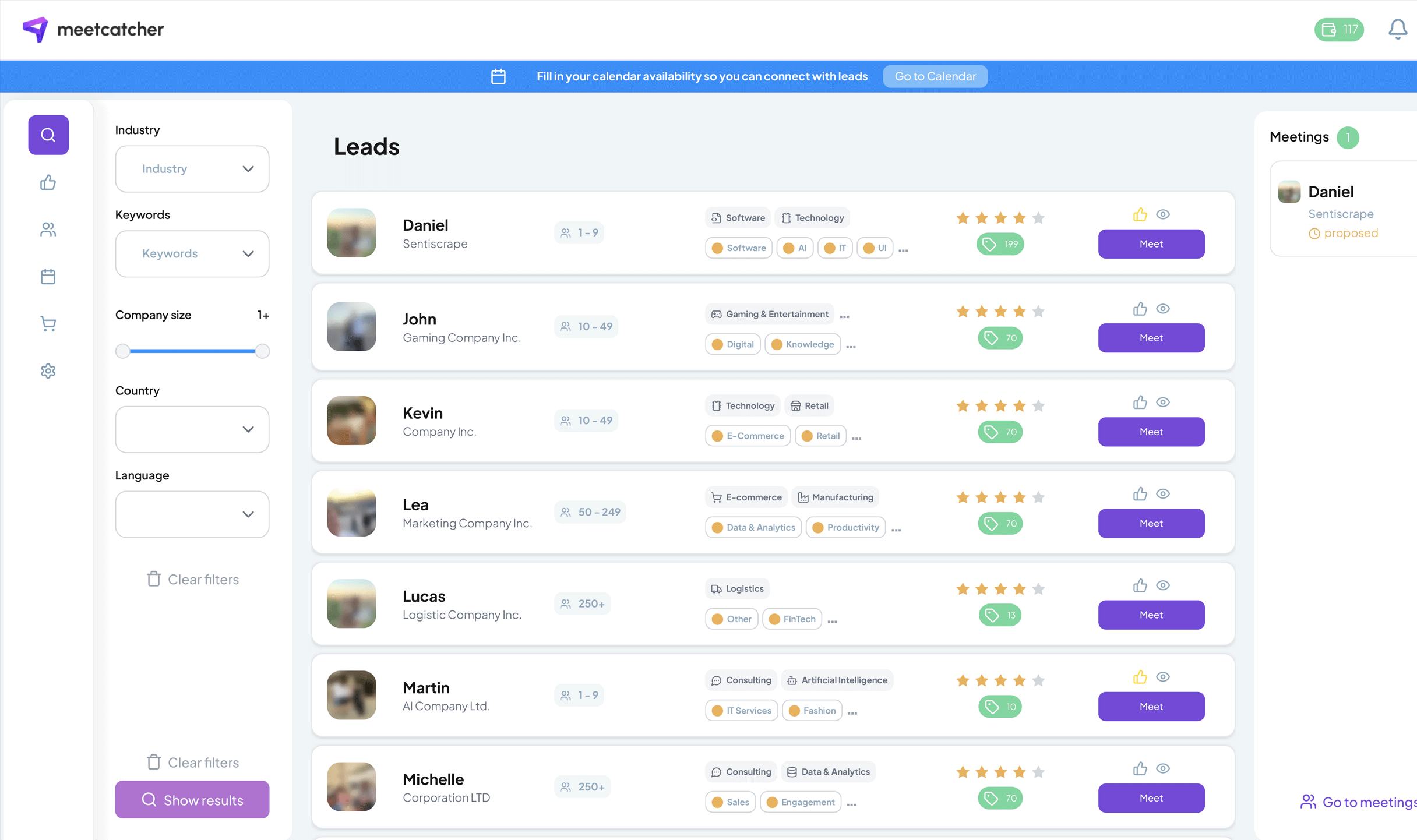
That’s exactly where tools like Meetcatcher come in — bridging the two. It’s a platform designed for quick, one-on-one B2B video meetings with people you haven’t met yet, similar to the rhythm of business speed networking but fully online. You can instantly connect, talk for a few minutes, and discover whether there’s potential for collaboration — all without leaving your browser.
Final thought
Networking is no longer about being everywhere — it’s about being relevant wherever you show up. Offline helps people remember your face; online makes sure they never forget your name. And when both channels work together, your professional relationships scale from a few lucky meetings to a system that constantly opens new doors.