Sales and Rejection: How to Handle It Without Losing Momentum
Rejection is the most constant companion of every salesperson — and it’s not your enemy. In B2B, most conversations will not end in a deal, and the sooner you accept that, the faster you grow. Sales is a game of probability, not perfection.

Accepting rejection as part of the job
Even the best salespeople close only a small fraction of their leads. One experienced rep summed it up clearly:
In our cold calling campaigns, success rates hover between 1–5%. If I took every ‘no’ personally, I’d have quit years ago.
That’s reality — and it’s liberating once you internalize it. If only 1 out of 20 calls turns into a real opportunity, that doesn’t mean the other 19 were failures; they were necessary steps in finding the one that matters. Each “no” sharpens your message, timing, and understanding of the market.
It’s better to see rejection as information, not judgment.
When a conversation turns tense
Sometimes, rejection doesn’t come politely — it comes with disagreement. That’s where composure makes the difference between a rookie and a pro.
A senior account manager shared a principle he teaches his team:
If the discussion isn’t going your way, never say the client is wrong. Say that from your experience, it tends to work differently — then suggest a joint session to compare notes.
He often organizes small expert panels or short follow-up calls, including someone from the client’s side and someone from his own. Together they review data, share case studies, and look for overlap instead of arguing. This turns confrontation into collaboration — and in over 30% of such cases, they re-open the deal later.
Rejection handled calmly often leads to respect — and respect often leads back to business.
Learning from every “no”
Every rejection hides a reason. Some are about timing, others about budget, trust, or priority. If you can identify which one applies, you can improve your next approach.
- Timing: Set a reminder to re-engage in 3–6 months.
- Budget: Offer lighter packages or pilot versions.
- Priority: Send relevant updates showing how your solution connects to their current focus.
- Trust: Share testimonials, references, or organize that expert panel again.
Rejection data is gold. Teams that document why deals were lost can increase future close rates by up to 15–20% simply by addressing recurring objections.
We track every ‘no’ in our CRM like it’s a lead,” one sales director noted. “Half of our current clients first said no six months ago.
Re-engage, don’t retreat
A lost deal today isn’t lost forever. Follow-up research shows that over 60% of B2B buyers eventually reconsider previously rejected solutions within a year — especially if the salesperson stays visible and professional. Use soft reactivation tactics:
- Comment on their LinkedIn updates.
- Send a small insight or case study without a pitch.
- Reconnect when their company announces new hires or funding.
This keeps the relationship alive without pressure.
Turning rejection into opportunity
If a prospect clearly isn’t ready to buy your main product, consider cross-selling something smaller or complementary — even if it’s just a consultation or diagnostic. Sometimes, a €100 workshop opens the door to a €10,000 contract later.
Rejection isn’t the end of a relationship; it’s often the beginning of a longer sales cycle.
From rejection to connection
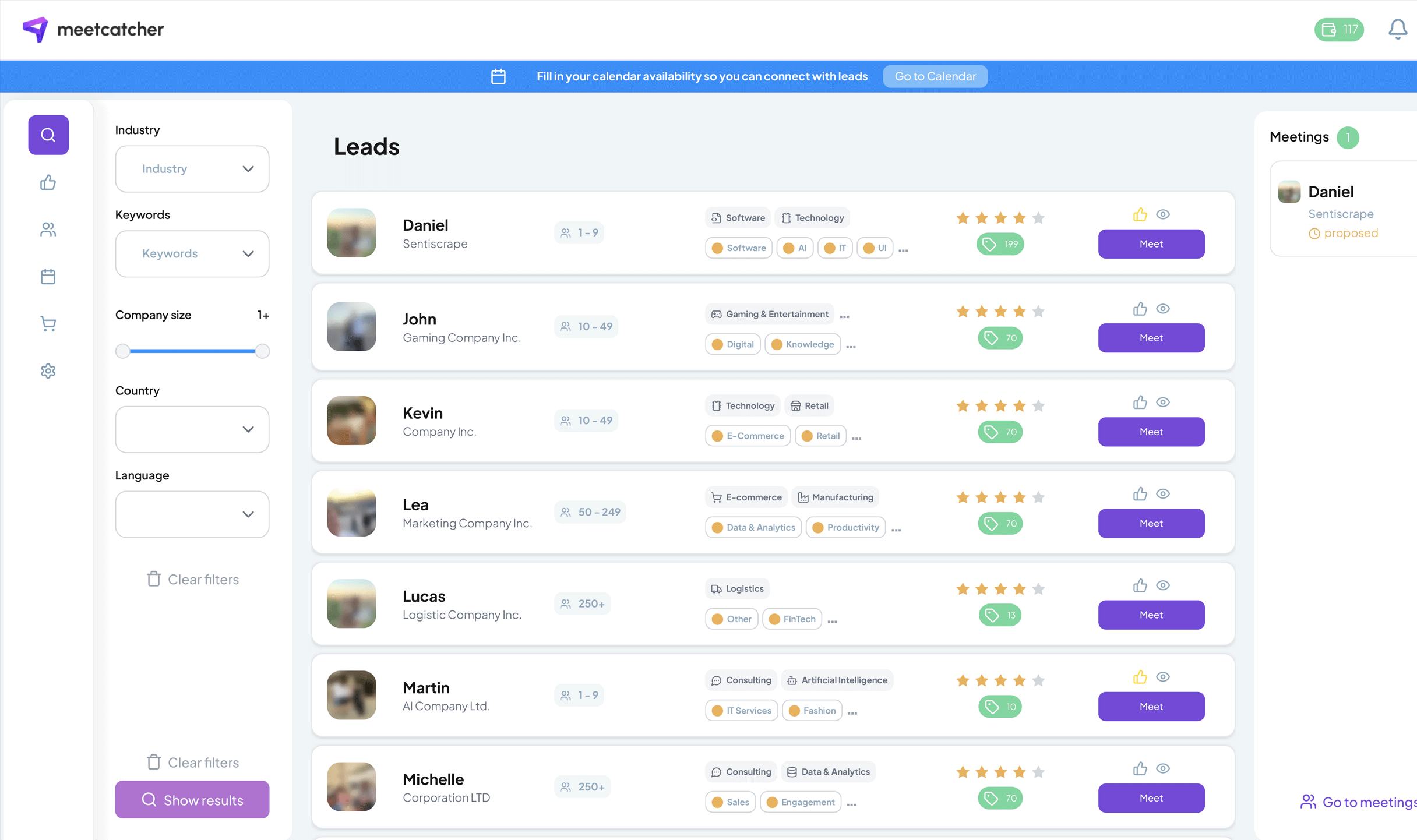
Tools like Meetcatcher can help make these re-engagements more natural. Instead of sending another long email chain, you can invite a prospect to a short, structured video meeting — a new, low-effort first step that doesn’t feel like another sales pitch. Meetcatcher is built for initiating these first B2B connections with people you haven’t met before, giving both sides a chance to talk without pressure or commitment.
In many cases, that single 10-minute conversation achieves what ten follow-up emails can’t: a renewed opportunity.
Final thought
Rejection is unavoidable — but irrelevance is optional. If every “no” teaches you something, sharpens your pitch, or leads to a better second attempt, then rejection isn’t a wall; it’s a mirror. And those who keep learning from it never really lose.