What to Do When a Prospect Says ‘Let Me Think About It’
It’s every salesperson’s least favorite phrase: “Let me think about it.” In B2B, you’ll hear it often — and it’s not always bad news. But how you respond determines whether the deal moves forward or disappears into silence. The key is knowing when to respect hesitation and when to turn it into clarity.

Why long decision cycles are normal
In B2B, decision-making takes time. Buyers coordinate multiple stakeholders, budgets, and integrations. It’s not emotional impulse — it’s organizational inertia.
According to market data, the average B2B sales cycle lasts 84 days, while complex deals stretch beyond 120–180 days. For mid-sized SaaS contracts, the median from first call to signature is around 66 days, and enterprise deals can easily hit 9 months.
That’s why “let me think about it” doesn’t always mean no. It often means not yet. Your job is to keep momentum alive without crossing into pressure.
When gentle assertiveness helps
One seasoned rep shared that he used to lose momentum by staying too polite.
I used to say, ‘Sure, take your time.’ But then I’d never hear back. Once I started asking for small next steps — or hinting that timing mattered — my close rate jumped.
He began creating light FOMO (fear of missing out) by framing offers around movement:
- “We can still include you in this quarter’s onboarding wave.”
- “We only have two pilot slots left for October.”
That soft urgency turned passive “let’s think” responses into scheduled follow-ups — without aggression.
This approach works because it reframes hesitation as opportunity cost, not confrontation.
When pressure backfires
But there’s another side. A saleswoman in a consulting firm found that any hint of pressure made her prospects withdraw.
My clients hated urgency tactics. They needed space to analyze. When I gave them breathing room and focused on support instead, they came back faster.
The takeaway? Know your audience. Enterprise buyers with large teams often prefer logical reassurance over emotional triggers. SMB or startup clients, on the other hand, respond better to energy and movement. Your tone should mirror their decision-making culture.
The question that reveals the truth
If a prospect asks for time, don’t end the conversation there. Ask a clarifying question like:
- “Absolutely, I understand. Out of curiosity — what would need to change in the offer for us to move forward today?”
- “Is there anything missing that’s holding you back from saying yes now?”
- “What’s the main factor you’re still evaluating?”
These questions uncover real objections — price, timing, or internal alignment — instead of vague delays. Most importantly, they reopen dialogue. If you can isolate the true reason for hesitation, you can adapt instead of waiting indefinitely.
Don’t let the deal fall asleep
Following up is where most deals die. Research suggests that if you let communication lapse for more than 10 days, there’s a 70% chance the prospect won’t re-engage at all. That’s not malice — it’s human nature. Other priorities take over.
To avoid that:
- Follow up within 48 hours after the “think about it” conversation.
- Send a value-based reminder — not “just checking in,” but a relevant article, case study, or demo snippet.
- Schedule a quick call to review questions or concerns.
And don’t hesitate to mix mediums: call, email, and even a short LinkedIn message keep you visible in different channels.
Persistence, when respectful, signals reliability. Buyers notice who stays consistent after the initial pitch.
Watch for red flags
Sometimes, “let me think” is simply polite rejection. Statistically, if the buyer doesn’t provide a deadline or next step, there’s an 85% probability the deal will never move forward. The best move? Politely ask for time framing:
Of course, take the time you need — would it make sense if I check back in next week?
If they agree and suggest a window, there’s life in the deal. If they hesitate or stay vague, shift focus elsewhere. Good salespeople know when to push — great ones know when to reallocate energy.
Keep the relationship alive
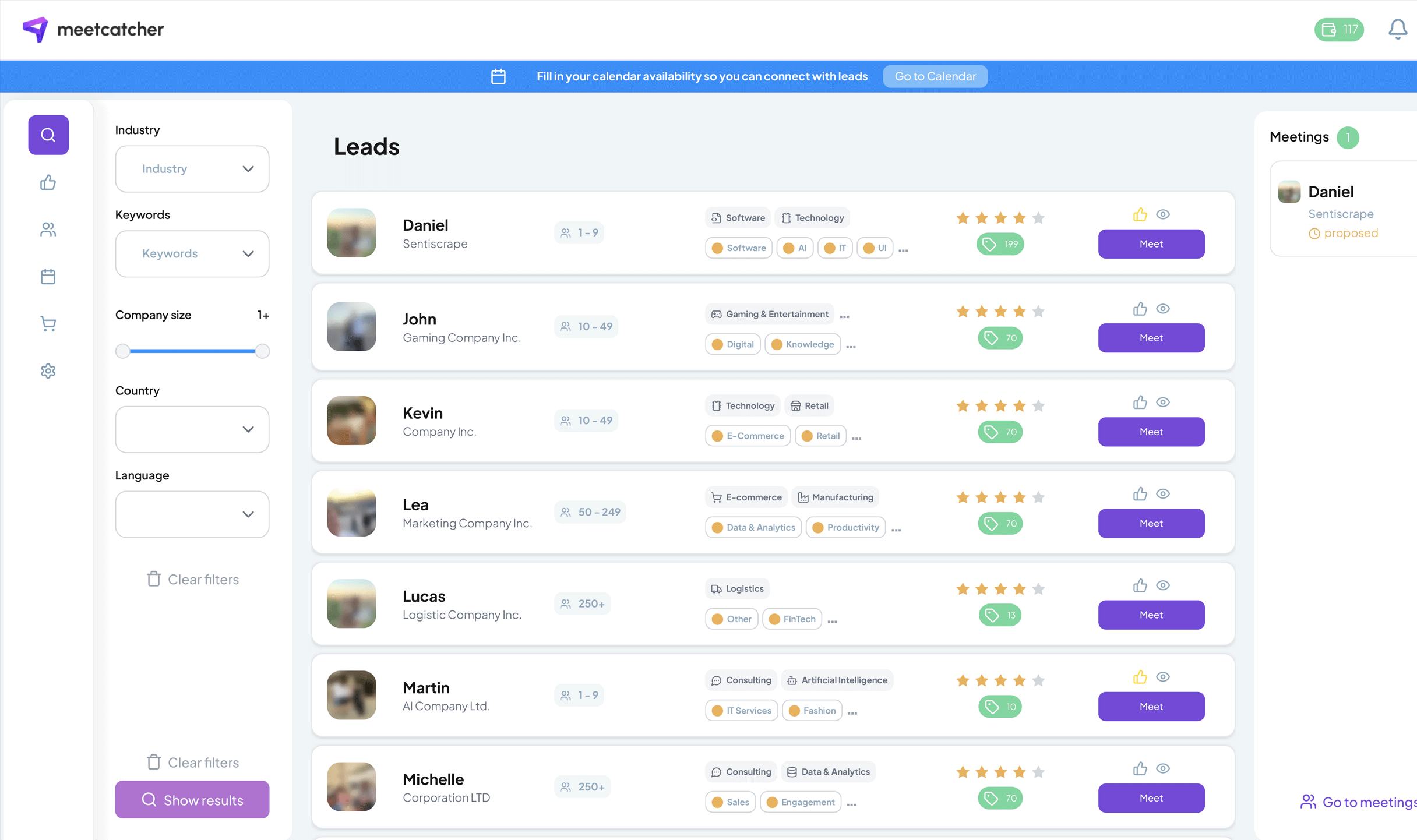
Even if a deal stalls, your brand presence keeps working for you. When your company stays visible — through LinkedIn, newsletters, or short meeting invites — you’re planting recognition seeds for later. This is where tools like Meetcatcher prove surprisingly useful. You can send a friendly invite for a short, low-commitment video chat that keeps communication alive without pressure. It’s a reminder that you’re still here — available, not desperate.
The psychology of hesitation
Decision paralysis often comes from fear of loss, not lack of interest. The buyer fears making the wrong move — not moving at all. Your role is to de-risk the decision. Reassure them with:
- Social proof (“Others in your industry are already using this”).
- Simplicity (“We’ll handle onboarding for you”).
- Optionality (“Start with a trial, upgrade later”).
The less risky it feels, the faster the “maybe” becomes a “yes.”
Summary: from patience to progress
“Let me think about it” is inevitable in B2B — but not fatal. To handle it well:
- Accept that long sales cycles are normal.
- Respect hesitation but ask clarifying questions.
- Create small, risk-free next steps.
- Follow up consistently — don’t let it fade.
- Balance empathy with gentle urgency.
The art of sales isn’t forcing decisions — it’s guiding people through indecision. The best salespeople know that thinking time isn’t a pause in the deal; it’s part of the process itself.