When to Sell Through PPC — and When to Go Personal
There’s a point in every sales strategy where you must choose: Should you drive conversions with automated campaigns, or invest time in personal relationships? The answer depends on price, complexity, and the psychology of your buyer. Both approaches can work — but not for the same products.
The anatomy of two very different funnels
Low-cost digital products and add-ons (for example, SaaS subscriptions under $20/month) tend to succeed through high-volume, low-touch funnels:
- Click an ad →
- Try a demo or free trial →
- Upgrade with minimal human interaction.
For premium services or solutions with longer adoption cycles, however, the funnel looks different:
- Click an ad or see a post →
- Visit website →
- Book a meeting →
- Close after demo, proof of concept, or follow-up.
The second type is longer, but it converts better at higher price points. According to aggregated 2025 SaaS and B2B benchmarks, when deal values exceed $500, personal outreach increases conversion rates by 3–5× compared to automated campaigns alone.
One experienced sales manager put it simply: “Above twenty bucks, people stop buying features — they start buying confidence.”
That’s where human contact wins.
The power of personal selling
A study from 2024 across 1,000 B2B deals showed that video or live calls improved close rates by 47% compared to fully automated funnels. Even short 10–15 minute introductions dramatically raised trust and understanding of the offer.
It’s not just psychology. Personal selling helps overcome objections in real time — pricing, integration, uncertainty — things a landing page simply can’t do. In B2B, where buying involves risk, a friendly face (even through a webcam) is a strategic asset.
That’s why many sales-led SaaS companies use automation to reach the right people but convert them personally.
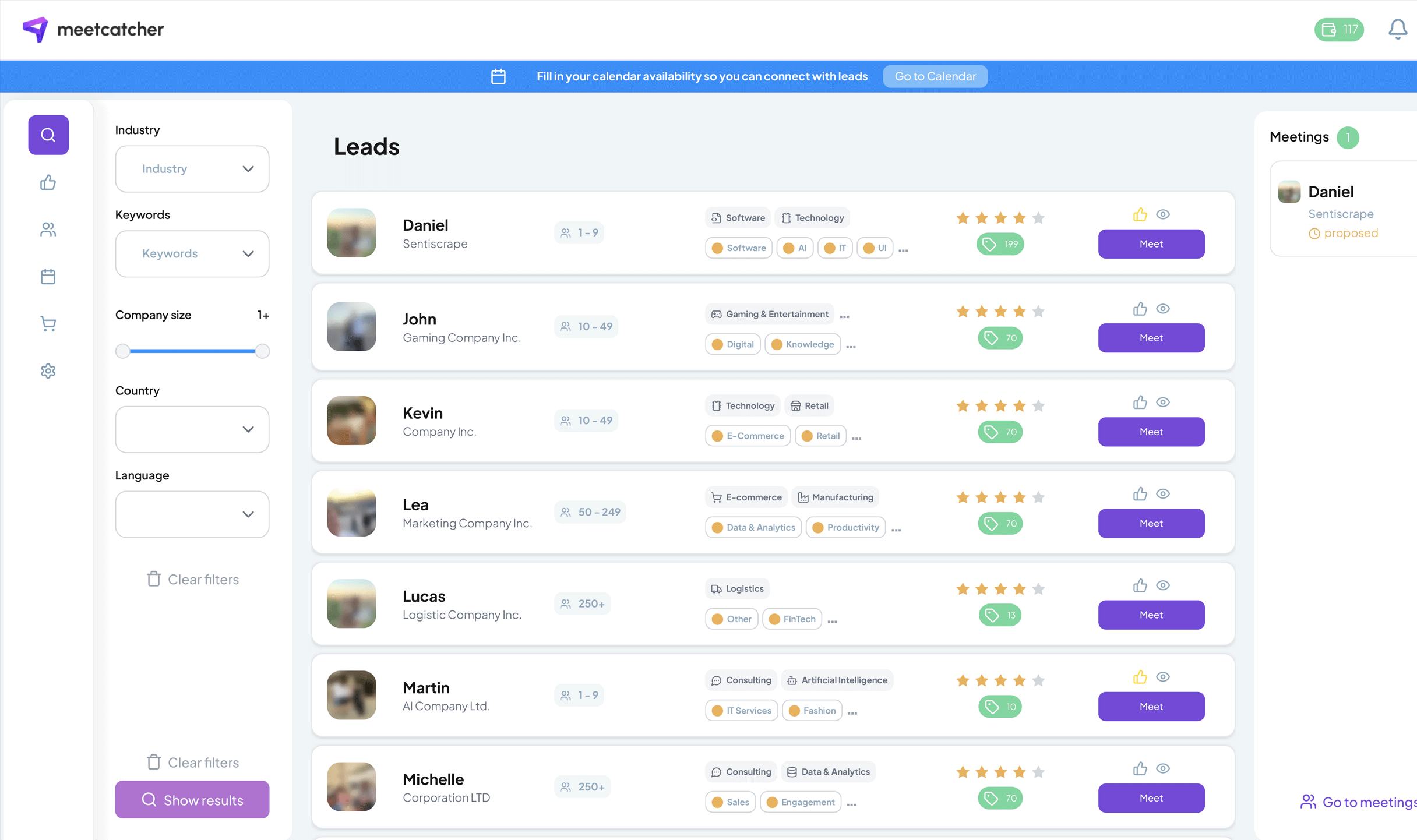
Tools like Meetcatcher are built for exactly that — helping sales teams or founders search for prospects and connect with them through quick video calls. Instead of relying solely on ads or forms, they turn interest into human contact in minutes.
How to get people to the meeting
So how do you move prospects from “click” to “call”?
- Simplify the path: Make booking frictionless — one click to schedule a time.
- Offer value for the meeting: For example, “We’ll audit your workflow in 10 minutes.”
- Follow up fast: The likelihood of booking drops by 60% after 24 hours of delay.
- Use multichannel triggers: Combine PPC remarketing with email or LinkedIn outreach — each touchpoint adds +10–15% to the meeting rate.
We treat ads as an invitation, not a closing tool,” said one outbound strategist. “The ad’s job is to start a conversation — not finish it.
When PPC makes more sense
PPC shines in low-risk, self-serve products — where the purchase decision is emotional, fast, and low-value.
Take this example:
- Average CPC on LinkedIn for B2B SaaS: €6.50
- Landing page conversion rate: 3%
- Cost per trial signup: €216
- Trial-to-paid conversion: 15%
- Resulting CAC: €1,440
Now, imagine you’re selling a $15/month SaaS. That’s $180 ARR per user — you’d need at least 8 months to break even, not including churn. Here, PPC is sustainable only with low-cost channels (Google Search, Meta) or if you increase ARPU through bundles and upsells.
However, if you add a personal call stage, even short and pre-qualified, the trial-to-paid conversion can rise from 15% to 35%, cutting CAC by nearly half. The cost of the call? Often less than €20 in human time.
The “20-dollar rule” — when it flips
A veteran B2B sales executive once shared a simple rule of thumb:
Under twenty dollars, people click and buy. Over twenty, they want to talk.
It’s not a strict limit, but it reflects how decision-making shifts. At lower prices, convenience wins — customers don’t want friction. But as soon as risk or complexity increases, they prefer human reassurance. In B2B, this often means a short conversation, a live demo, or even a quick audit before signing.
Hybrid funnels win
The best-performing companies don’t choose between PPC and personal selling — they blend them. They use ads to attract, automate qualification through forms or chatbots, and then hand over high-value leads to sales for personal follow-up.
For example:
- Ad campaign generates 1,000 clicks.
- 3% convert to demo requests → 30 leads.
- 20 of those book a meeting.
- 5–6 deals close.
That’s a conversion rate of 0.5% from click to sale, but with high average deal value, it’s extremely profitable.
Final takeaway
Use PPC when your offer is simple, cheap, and scalable. Use personal selling when your offer is complex, high-value, or trust-sensitive.
And remember: automation can bring people to the door — but it takes a conversation to get them inside.